
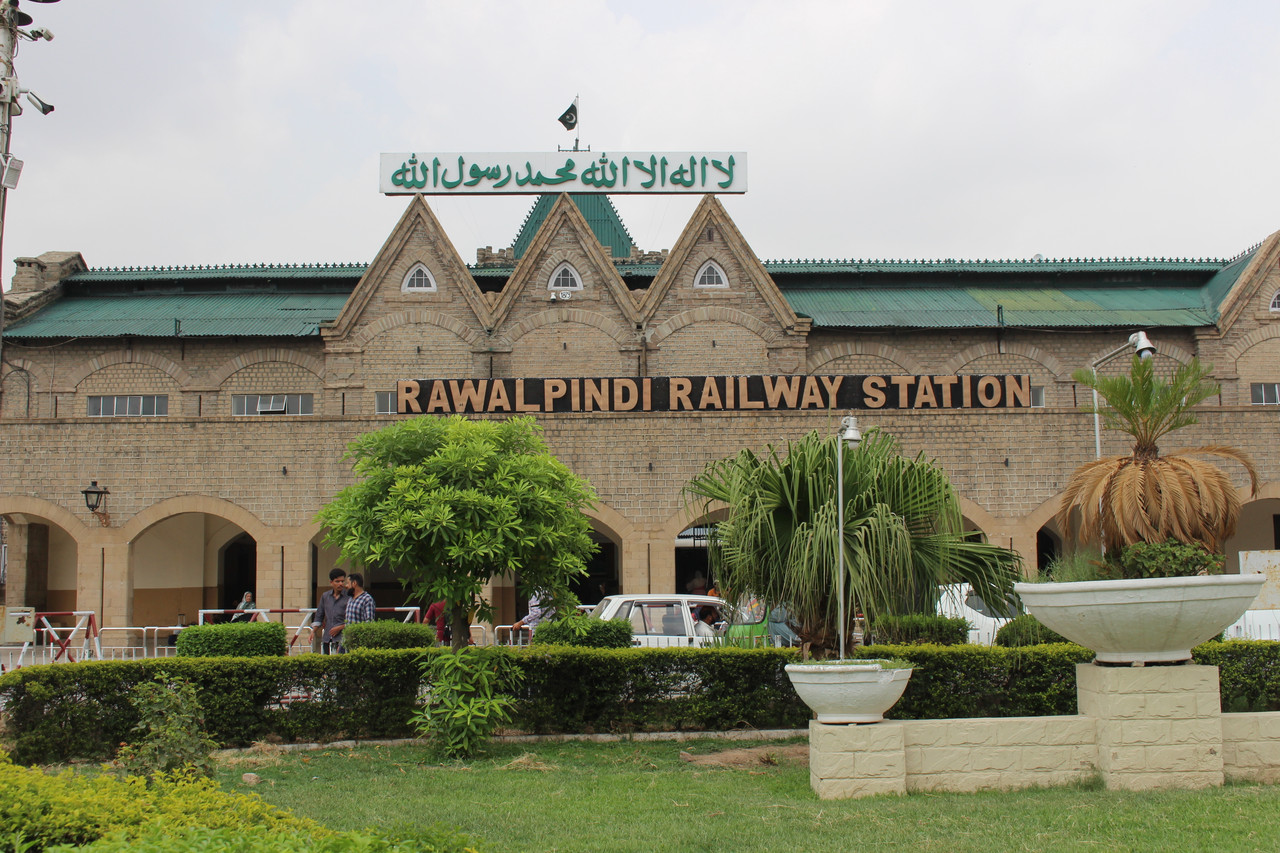
Long before Rawalpindi became known as the gateway to Islamabad, it was a critical node on one of colonial India's most important railway lines. At the center of that legacy sits Rawalpindi Railway Station, a Victorian-era structure that has witnessed nearly a century and a half of continuous rail traffic, political change, and architectural evolution. Its yellow sandstone walls and arched entrances still stand today as one of the finest surviving examples of Indo-Saracenic railway architecture in the region.
Surveying a Line Before the Nation Existed
The story of Rawalpindi Railway Station actually begins decades before the station itself was built. The route connecting Lahore and Peshawar via Rawalpindi was first surveyed in 1857 a full 24 years before the station opened its doors. This early survey reflects just how strategically important this corridor was considered, even in the mid-nineteenth century, as colonial authorities looked to link major Punjab cities and extend rail access toward the northwestern frontier.
Construction on the broader rail network began in 1870 under the banner of the Punjab Northern State Railway, a project aimed at extending reliable rail infrastructure through Punjab and beyond. Rawalpindi Railway Station itself officially opened in 1881, marking the culmination of over two decades of planning and construction along this critical route.
A Merger That Reshaped the Network
Rawalpindi's railway story took another significant turn in 1886, just five years after the station's opening, when the Punjab Northern State Railway line merged with the Scinde, Punjab & Delhi Railway. This merger created the North Western State Railway, a considerably larger and more integrated network connecting Punjab with Sindh and Delhi. This consolidation placed Rawalpindi firmly within a much broader colonial rail system, cementing the city's role as a key transit point between the northwest frontier and the rest of British India.
Indo-Saracenic Grandeur
Architecturally, Rawalpindi Railway Station is a standout example of Indo-Saracenic design a colonial-era architectural style that deliberately blended British engineering sensibilities with Mughal, Rajput, and Islamic decorative elements. This fusion style was especially popular for public buildings across British India, including railway stations, and Rawalpindi's station is a strong regional representative of the trend.
The building's most immediately striking feature is its yellow sandstone construction, a material choice that gives the station a warm, distinctive appearance quite different from the red brick commonly used in other colonial railway buildings. Arched entrances punctuate the facade, a design choice that nods to Islamic architectural traditions while also serving the practical purpose of channeling large volumes of passenger traffic efficiently.
Original details from the station's Victorian-era construction still survive, including kerosene lamps that once lit the platforms before electrification became standard, along with an old clock and bell positioned near the platform functional objects that also serve as tangible connections to the station's nineteenth-century origins.
A Station Built for Function and Flow
Beyond its decorative flourishes, Rawalpindi Railway Station was designed with clear functional logic. The main building is divided into three distinct sections: freight, passenger, and offices a layout that allowed goods handling, passenger movement, and administrative operations to run in parallel without interfering with one another.
"Unlike many colonial structures that have been repurposed, abandoned, or demolished, this station has continued serving its original function largely uninterrupted since 1881."
The complex extended beyond just the main station building. An adjacent Railway Club provided a social and recreational space, likely for railway officers and staff, reflecting the importance placed on employee welfare and community within the colonial railway system. A police station was also built alongside the complex, underscoring the security considerations that came with operating a major transit hub.
Passenger flow was further managed through three separate entrances, distinguishing between regular passengers and those traveling with baggage a level of operational planning that highlights just how much traffic this station was designed to accommodate even in its earliest years.
The Clock and Steam Engine: Rawalpindi's Most Photographed Landmarks
If there's one image most associated with Rawalpindi Railway Station, it's the grand clock and steam engine displayed prominently in front of the building. These two features have become the station's most recognizable symbols, drawing the attention of commuters, history enthusiasts, and photographers alike.
The steam engine display, in particular, offers a tangible link to the golden age of rail travel in South Asia a physical reminder of the locomotives that once powered the entire North Western State Railway network. For visitors interested in railway heritage, this display alone makes the station worth a stop, even for those not catching a train.
Why Rawalpindi Railway Station Still Matters
More than 140 years after it first opened, Rawalpindi Railway Station remains an active, functioning transit hub a rare feat for a Victorian-era building of its scale and complexity. Unlike many colonial structures that have been repurposed, abandoned, or demolished, this station has continued serving its original function largely uninterrupted since 1881.
That continuity makes it one of the most historically significant railway buildings in Pakistan. It's not a museum piece frozen in time; it's a living, working structure that has adapted to more than a century of technological change, from steam locomotives to modern rail service, all while retaining its original Indo-Saracenic architectural character.
Visiting Rawalpindi Railway Station
For travelers passing through Rawalpindi, the station offers more than just a place to catch a train it's a genuine architectural landmark worth exploring in its own right. The yellow sandstone facade, arched entrances, and the iconic clock-and-steam-engine display near the entrance make for a compelling stop for anyone interested in colonial-era architecture or the history of rail travel in South Asia.
As one of the oldest continuously operating railway stations on the historic Lahore-Peshawar line, Rawalpindi Railway Station stands as a monument to the ambitious infrastructure projects that shaped colonial Punjab and as a reminder that some of the region's most significant heritage sites are hiding in plain sight, still serving their original purpose more than a century after they were built.